Second Premiere

You already made the videos.

For evergreen YouTube channels whose income comes mainly from AdSense and sponsors. Every video you have already made is an asset you only monetised once. One proven video is premiered again in sixteen languages, judged by your own viewers first, then rolled out and measured against your baseline. Then the whole catalogue follows, and nothing lands on your team.

The leak

Your best videos, invisible.

The people who would love your content cannot find it, and that has been true since your first upload. Your audience is English-speaking because that is the only audience you have ever been visible to. It is not evidence of preference. It is evidence of the constraint.

The surest thing you can do for a channel is not making more videos. It is stopping the ones you already made from being invisible to most of the planet. This is not a new content bet. There is no filming, no editing, no strategy pivot, no learning curve. You are not buying a service. You are stopping a leak.

See the numbers YouTube published

On the record

Published by YouTube. Said by MrBeast.

On chef Jamie Oliver’s channel, using multi-language audio tracks amplified views by 3x.

YouTube, on its multi-language audio feature, 10 September 2025. YouTube Official Blog

if you’re not dubbed, you can’t reach the majority of the world

MrBeast, on YouTube’s multi-language audio and his own channels, quoted inside the outlet’s sentence, 28 March 2025. Entrepreneur

Once I backed up my whole catalog and drove some Spanish speakers over to the channel, YouTube’s like, ‘Oh, people that speak Spanish like this video. Let’s give it to more people that speak Spanish.’ The next thing you know, every time you upload, the video gets served to 10 million people who speak Spanish.

MrBeast, on YouTube’s multi-language audio and his own channels, 23 February 2023. Tubefilter

MrBeast and YouTube have no connection to VelociDub. Each statement describes YouTube’s multi-language audio feature or the speaker’s own channels, and is quoted from the source linked beside it.

The mechanism

Found. Understood. Watched to the end.

  1. 01

    Found

    A localised title, description and thumbnail text, written for each audience rather than translated from the English. YouTube says its search systems read translated titles and descriptions, and YouTube’s localised thumbnails are a shipped feature for long-form video, so the video can be found by people who search in their own language.

  2. 02

    Understood

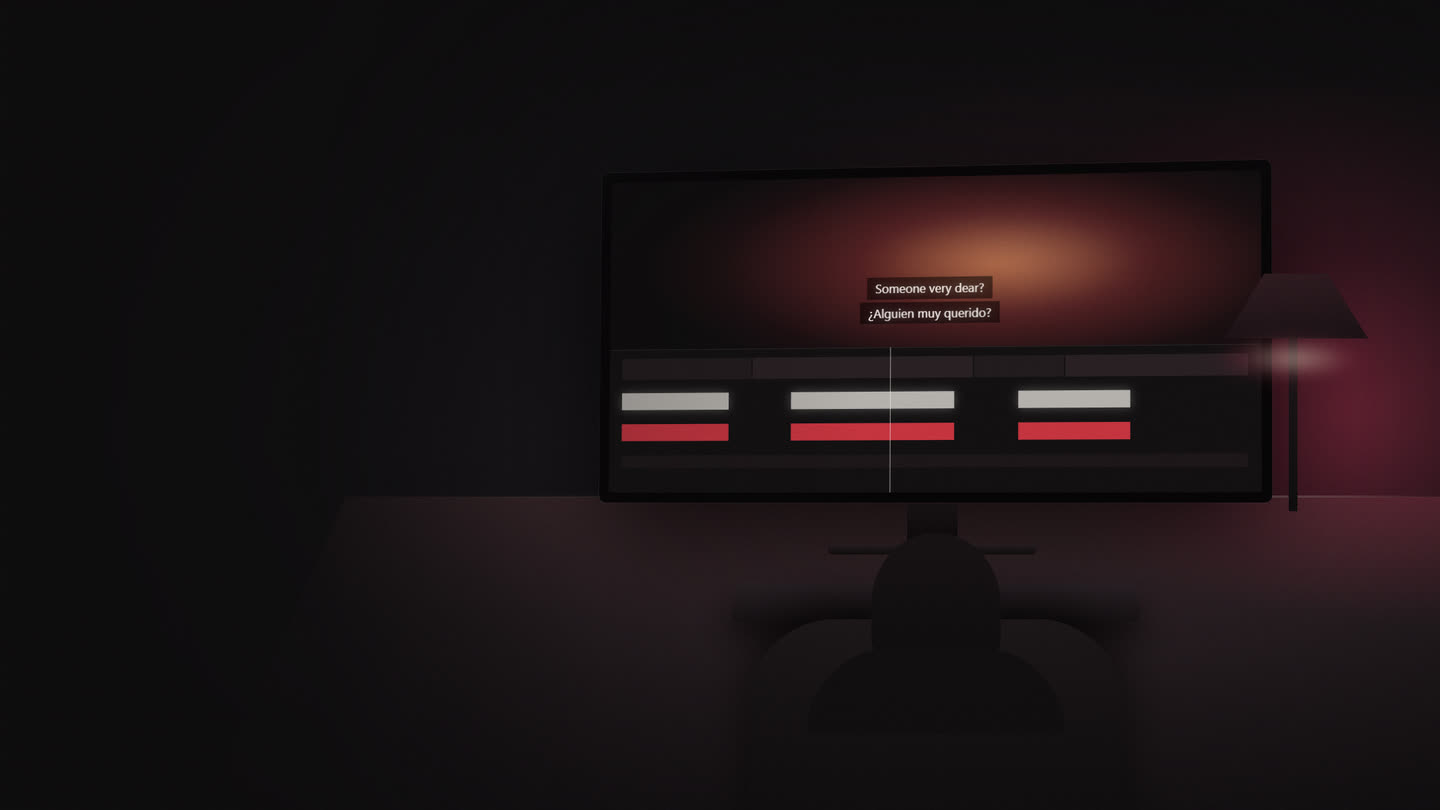
    Captions timed to the cut, not to the sentence, so the eye returns to the picture. Terminology, the joke, the sponsor read and the call to action are decided once, in a glossary agreed with you, and checked in review for each language.

  3. 03

    Watched to the end

    The third layer is audio. Where a video is eligible, YouTube’s own automatic dubbing can add a second audio track, and those dubs cannot be edited. A track produced for a pilot is a scoped option, agreed in writing with the voice permissions it needs. No dubbed audio exists on this site.

Open the full proof

Done for you

Three things you do. The rest is ours.

Everything below is scoped per pilot and written into the agreement before work starts. You make zero new videos, and your English channel carries on untouched.

What you do

  • Grant scoped access, in writing, to what the publication plan needs, revocable by you.
  • Sit for one interview about your voice and your terminology.
  • Approve the sample your community judged, and give written acceptance before anything is published.

What a pilot covers

  • A localised title, description and thumbnail text in each of the sixteen languages, for the one video the pilot covers.
  • Captions timed to the cut in each language, with the terminology decided once in the glossary.
  • Where a video is eligible, YouTube’s own automatic dubbing can add a second audio track, and those dubs cannot be edited. A track produced for a pilot is a scoped option, agreed in writing with the voice permissions it needs. No dubbed audio exists on this site.
  • Publication on your channel or on separate language channels, decided per pilot.
  • A sponsor and rights review before the sample, so nothing reaches a territory it was never cleared for.
  • A baseline taken before the rollout, and a measured result you read with us.
  • After the pilot, the whole catalogue: every video you have already made, and every one that follows, in the languages your viewers signed off, as part of the agreed scope.
  • Nothing lands on your team: no editing time, no upload work, no workflow change.

Watch the proof

Where a pilot goes

Sixteen languages. One video.

Every pilot covers all sixteen, chosen for where YouTube’s audience is, in order of total speakers.

  • Hindi हिन्दी
  • Spanish Español
  • Arabic العربية
  • French Français
  • Bengali বাংলা
  • Portuguese Português
  • Indonesian Bahasa Indonesia
  • Russian Русский
  • German Deutsch
  • Japanese 日本語
  • Telugu తెలుగు
  • Punjabi ਪੰਜਾਬੀ
  • Tamil தமிழ்
  • Korean 한국어
  • Italian Italiano
  • Polish Polski

Sixteen languages per pilot. Every language here is one YouTube can automatically dub an English video into. Chinese is not listed because YouTube is not available in mainland China, where most Chinese speakers are. The proof on this site covers English, Spanish and French captions and draft metadata, with original English audio, not dubbed. Tell us in the enquiry form which language your viewers already ask for; if it is not listed there, choose Other and name it in the context field.

The Tribe’s Verdict

Your own viewers judge it first.

Pick one video. Your choice, ideally one where you talk fast and use a lot of slang, because that is the hardest case. It is localised into the sixteen languages to the agreed standard and checked against the written standard by the agreed reviewer for each language before anyone else sees it. Then it goes to your own community, and their native-speaking members judge their language. A language they do not sign off does not publish, and nothing wider happens without your written sign-off.

You decide before you are committed, on your viewers’ judgement rather than on our promises. You do not have to believe us about quality. You just have to look at one video, sixteen times.

See the three commitments

Named commitments

Three things we put in writing.

  1. 01

    The Tribe’s Verdict

    Standard
    One full video is localised into the sixteen languages to the agreed standard, checked against the written standard by the agreed reviewer for each language, and then shown to your own community. Your native-speaking members judge their language.
    Window
    Before any wider work, and before anything is published.
    Remedy
    A language they do not sign off does not publish. If none is signed off, the pilot does not go ahead.
  2. 02

    The Written Standard

    Standard
    The glossary, the sample standard and the agreed reviewer for each language are set down in writing before work starts. The standard is one sentence: made for YouTube and for your audience, in your voice, in another language.
    Window
    The review window named in the pilot agreement.
    Remedy
    Corrections to the agreed standard are part of the pilot, and nothing is published without your written acceptance.
  3. 03

    The Keys Are Yours

    Standard
    Ownership and exit terms are written into the pilot agreement before work starts, and the agreement assigns every localised asset to you on full payment.
    Window
    Written before work starts; assignment on full payment.
    Remedy
    If the engagement ends, what was assigned stays yours.

Each commitment takes effect through the written pilot agreement, which names its standard, its window and its remedy for your pilot.

Read the website terms

The whole catalogue

Then every video you have ever made.

The pilot is one video, so your viewers can judge it. The offer is your whole catalogue. Once they have signed off, the agreement can cover every video you have already made and every one you publish next, in the languages they signed off, in order behind the first.

Nothing lands on your team. Titles, descriptions, thumbnail text and captions in each language, publication on the agreed plan, a sponsor and rights review before each video, and a measured result you read with us. Made for YouTube and for your audience, in your voice, in another language. That is the standard, and it is written down before work starts.

Ask whether it fits

Who it is for

For some channels. Not for others.

This is for you if

  • Your evergreen videos still find viewers months after upload, without a push from you.
  • Your income comes mainly from AdSense and sponsors.
  • You already see views or comments arriving from other geographies. YouTube’s own guidance names that as the sign of a good candidate.

This is not for you if

  • Your content is hyper-local and genuinely does not travel. If that is true, we will tell you so.
  • You will not grant scoped access in writing.
  • You want to skip the sample. Your viewers’ verdict is the front of every pilot.
  • You need a promised number before you start. We do not make one.

Ask whether it fits

Before you enquire

Straight answers.

Why sixteen languages at once, and why not Chinese?
Because one language tells you about one audience, and the point of a pilot is to learn where your catalogue travels. The sixteen were chosen for where YouTube’s audience is, and every one is a language YouTube can automatically dub an English video into. Chinese is not among them because YouTube is not available in mainland China, where most Chinese speakers are.
Do I need a separate channel?
Not necessarily. YouTube supports translated titles and descriptions, localised thumbnails and multi-language audio tracks on eligible videos, so a separate channel is a choice, not a requirement. The publication plan decides per pilot and per language, on your audience, your rights and who will run each channel afterwards.
What about my sponsor segments?
They are reviewed before the sample. A sponsor read cleared for one territory may need adapting, re-clearing or cutting for another, and the scope says which. Your existing sponsor is never surprised by a market they did not agree to.
Do you dub my videos?
Not by default, and never without a written agreement. Where a video is eligible, YouTube’s own automatic dubbing can add a second audio track, and those dubs cannot be edited. A track produced for a pilot is a scoped option, agreed in writing with the voice permissions it needs. No dubbed audio exists on this site. The proof here is original English audio, not dubbed; what it shows is captions and metadata.
After the pilot, what happens to the rest of my videos?
That is the offer. Once your viewers have signed off the pilot video, the agreement can cover your whole catalogue: every video you have already made and every one that follows, in the languages your viewers signed off, in order behind the first. Nothing lands on your team. It is scoped and priced in writing before it starts, and the Keys Are Yours applies to every asset.
What does it cost?
It is agreed per pilot from three things: source minutes, review coverage and rights. The sixteen languages are the pilot, not a line item. There is no published rate, because a rate would have to ignore all three, and you would be paying for the average video instead of yours. The scope shows the price before you commit to anything.
Can you promise more views or revenue?
No. We are not promising to make your content better, change your thumbnails or crack the algorithm; none of that is in our control. Audience behaviour, eligibility and platform changes are outside anyone’s control, and a promised uplift would be a forecast dressed as a fact. What the pilot gives you instead is a baseline, a measured rollout and a written result you can act on: continue, change or stop.
Why not just use YouTube’s automatic dubbing?
Keep it on where it is available; it costs nothing. YouTube wrote in February 2026 that “Auto dubbing is now available to everyone, with an expanded library of 27 languages.” YouTube’s help page on automatic dubbing, retrieved 11 September 2026, adds: “You cannot edit automatic dubs.” A dub makes a video listenable for someone who has already found it. Being found takes a title, description and thumbnail written for that audience, a sponsor read cleared for that territory and a review that decides terminology. You can edit every line in your package.

Request a fit review

Two choices

So you either.

Premiere one video again

Send one link and the video you would choose. Your own viewers judge it in sixteen languages, and you decide with the result in hand.

Request a fit review

Leave the catalogue as it is

The catalogue is already built. It is just invisible, and it stays that way for the people who would have watched it.

Bring one video worth premiering again.

One proven video, sixteen languages, and your viewers’ verdict first.

Request a fit review